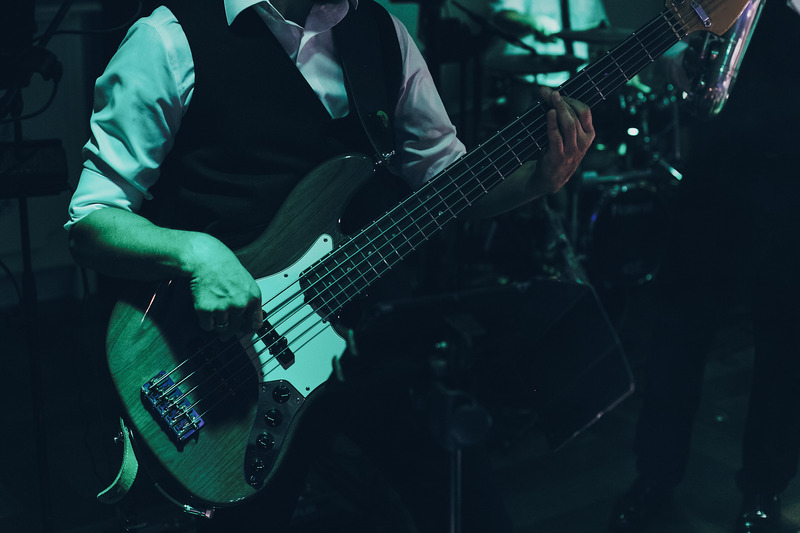
Booking a performer for your wedding is a big part of the day. Whether its for your ceremony, drinks reception to add atmosphere and fun, or for your evening party to get all your guests to the dance floor and make it a night to remember, here’s Fondant’s guide to get the absolute best from your wedding band – from the very first band you find to the final song to cap a perfect day!
Part One: Starting The Search
When to start looking?
If the music is going to be an important part of your day, START EARLY, especially if you’re getting married on a busy summer saturday! When you find the band you love, you need to remember that there is only one of that band and if someone has got in before you, you’re going to need to start the search again. We’d advise 12-18 months before your big day so consider it early in the planning process.
What am I looking for?
Some people choose bands that they’ve seen perform before and others look on agencies or via google to find their band. There are some things you should look for online – for example – any social media that the band have, any photos from past events (this really gives you a chance to visualise the band at your wedding), have a look at their setlist and see if there’s any reviews online for your band. Ultimately, it’s very rare you can see a band before booking (unless you gatecrash a wedding!) so booking via fondant means you can have the confidence that your band is professional, is fully insured and has the right level of experience.
Part Two: Questions to ask your venue
Can your venue have live music?
This one’s quite straightforward. It’s very rare, but there are instances where some venues won’t allow live music because of noise or licensing restrictions, but will usually allow a DJ. Make sure you check this with your venue just to make sure there will be no complications when you book the perfect act for your wedding day.
Is there a noise restricter in place at the venue?
This is probably one the most important questions you should ask your venue. Noise restricters often work alongside power plug points, so if your band is too loud, it will turn off the power, which can ruin a bit of the atmosphere, especially if it happens more than once!
Imagine the scenario – Your band turns up on the day to the venue, ready to bring the party to your evening celebrations. The venue manager then informs them that they have a very low noise restriction in place they’ll either have to perform acoustic, or not even be able to perform at all! There’s plenty that a band can do with advance notice. For example, full drum kits can be substituted with electric drum kits that can have the volume turned managed. Check with your venue if they have a noise limiter installed, and if so, what is the audio level the sound shouldn’t go over (they’ll usually tell you in decibels or DB) and pass this information on to the performers. If they play weddings quite regularly, they’ll be able to help you with this and even liaise with the venue to make sure it’ll go smoothly, so you don’t have to stress about it.
What happens when the band are not onstage?
When the band are onstage, you know you have music but what about when they are not performing? Most bands will provide a ‘virtual’ DJ set up where there is a playlist on to provide music from start to finish and some will even provide a manned DJ service for an extra charge. Check whether your band provides this, so you have music from start to finish.
How easy is it for the band to set up?
Does your act have access to the venue to bring in their equipment and set up for you to perform? Sometimes this can be liaised with the venue and just requires an act or band to wait until you and your guests have left a certain room so they can turn it around ready for you to enjoy your evening.
Some things to think about are:
• Is there parking near the venue for bands to bring in their equipment?
• Are there stairs to get up to the room you’ll be having your party in for bands to be aware of for loading in equipment?
• Where the band will be set up, does it get in the way for you and your guests from getting to certain areas?
These may seem like a lot of questions, but worth just checking over with the venue, who will be able to answer these questions easily for you so you don’t have to worry.
Does the venue have a curfew?
Some venues will be open until 1am, but a large majority have a curfew of 12pm and some that are in residential areas can be 11pm in some instances. Don’t let this put you off at all. This is normal for all weddings, and don’t forget, it’s a long day so these times are more than reasonable, unless you’re complete party animals. Venues require the music to be stopped at these times, so make sure you discuss with your band and dj these times so they suggest times and work with you to decide what times are best for you to have your entertainment.
Does the band or performer have the correct certificates?
Bands and acts are required usually to have two certificates: PAT certificate and public liability insurance. The PAT certificate is to make sure all electical equipment is safe to use and has been to tested for use, whereas public liability insurance (PLI) covers for things like damage or injury. Not all bands and acts have these two certificates, as some venues don’t ask for these to be shown, but they should be a usual requirement to ensure a safe performance. Some but not all venues will ask for these certificates to be sent over to them to qualify the band or act to play for your wedding day. All live bands you’ll find at Fondant have all the certificates you need for your venue.
Performance Space

When you’re booking a solo singer, remember they have speakers too and other equipment, not just a person standing in a corner. Wedding venues will usually have the space prepared for this and have a place in the room that acts usually perform.
Bands take up a lot more space with having speakers, a drum kit, amps, mixing desks etc but with technologies advancing too, they’re starting to take up a bit less space than they used to. A band will be able to tell you what their minimum requirement is for space. You can always ask the venue if bands normally play there too which will be able to tell you, but its definitely worth checking how much space they need. The venue will have the perfect amount of experience to tell you what bands have played there and how, so work with them and make sure your chosen act can be accommodated in the space.
Part Three: After booking your band
Choosing the bands setlist (and why you shouldn’t!)
So you’ve gone through the band’s setlist and you’ve seen that the band play your favourite songs – there’s a temptation to ask the band to play all of them… but don’t!
Your band has years of experience in working a room, learning how to weave a setlist that works – often on the fly – to make your dance floor full all night. You might not know it but that experience is part of the reason they stood out to you. You can certainly ask the band to make sure they play a big favourite from their setlist but give them the flexibility to work your crowd. Even at the most basic level, if the band have to re-tune guitars and set their instruments constantly to play your chosen songs, it’s people just standing round on the dance floor waiting and the performance will lose momentum. Trust your band and you’ll be rewarded for it on the night!
Think about where you want the band to play

If you want the band to really bring the party, think about where you want them to play. You don’t want them right up next to the bar and you don’t want them off in a side room somewhere away from the majority of your guests. You want them to be where all your guests can get involved and still mingle with the rest of the guests. This is especially true if the band are going to playing your first dance.
Another factor to consider here is the every band and performer needs power. Again, venues are usually prepared for this, especially if they’re new venues too, they will have built it with this in mind, but just make sure where you want them to perform has plug points.
When should the band play?
This is one of the most asked questions here at Fondant and the good news is – we got you. Most bands will either play 2 x 45 Minutes, 2 x 60 minutes or 3 x 40 Minutes. You should have the band do the first set once your evening guests have been in for an hour. This gives everyone chance to catch up, have a drink and settle in. As tempting as it is to opt for 3 sets to fit in around food / buffet an other points in the evening, remember that this is three times where the band have to get everyone back on the dance floor and so our recommendation here is two sets.
Part Four: Time To Party!
With all your due diligence done, you’re ready to have an amazing night with your band. The band will arrive in good time (between 60-90 minutes before the evening starts) to be able to set up and soundcheck and then will be ready to perform at your pre-arranged time.
Top Tip: Get up on the dance floor! Your guests will naturally gravitate towards you on your big day and will want to be where the happy couple are. You don’t need to be up busting moves and body popping (but you definitely should if you can!), simply being on or near the dance floor when the band start will do it. If the band are playing the first dance, stay on for a couple of songs and people will fill that dance floor and make it easier for the band to create an atmosphere.
Finally…
Although this information may seem daunting, most of them are very quickly answered questions that you can just send over to your venue or musician that’s performing. Don’t think about this as a massive list you have to sort out on top of everything else for your wedding, as it’s the venue and event managers job to help you with this information too and make it run as smoothly as possible for you. So just make sure any worries you or the band/ venue has, and most importantly, enjoy the most incredible wedding day knowing that everything is taken care of for you!